spring 2026 / method
the simple block of wood
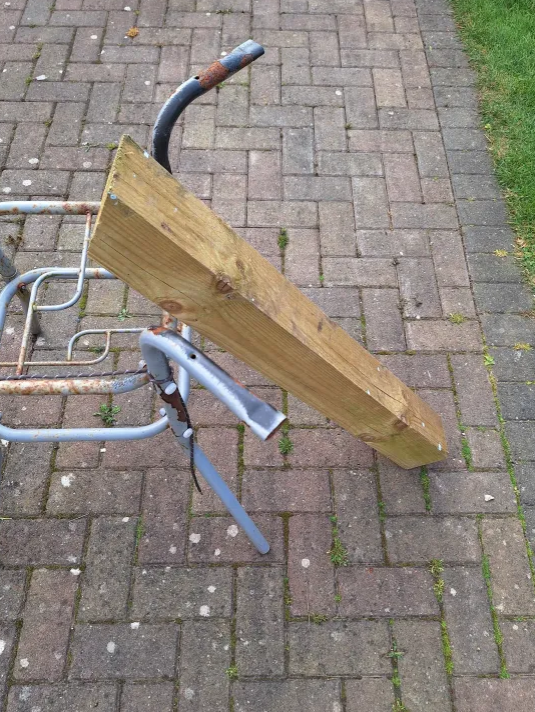
I have started working with a simple piece of wood lately. It is just a square post, but it functions much like the rings you see in wing chun training. The idea is not to move massive weight, but to develop a sort of constant, nimble control over a physical object. I set a timer for ten minutes and run through a sequence that keeps the hands and forearms moving without ever really pausing. At the end of every movement I'll hold it isometrically for 30 seconds or so in the trickiest muscle angle
The routine is straightforward. I move through pinch grip curls, reverse curls, and overhead presses. I include a chest press where the wood is pushed out in front, and curl circles where the bicep does the work of rotating the post. There is a move I call crush the mochi, where you hold the wood vertically, and another where you slowly flip the post like a baton. I also spend time simply balancing the wood in my palm or using just the fingers to turn it over in the air.
When I need a break, I use an active rest. I drop into a light horse stance and lay the wood across my forearms while holding them out in front of me. Once the breath is steady, I go right back into the movements. I have been doing this five days a week, adding one minute to the timer every week.
In my view, the secret to this is to treat it as active recovery. You should have fun with it and never push any part of the sequence toward failure. If the arms feel sore, you simply use a lighter piece of wood the next day. It is about building a connection with the object and keeping the blood moving through the joints. It is a quiet, effective way to keep the hands capable and the mind focused on the task.
spring 2026 / oddities
the man who chased the moth man and his invisible diet
Most people know John Keel as the man who went down to West Virginia to chase the moth man. He spent his life looking at the things that slip between the cracks of our reality, but he also wrote a very strange little book called the invisible diet. It is not your typical weight loss manual. In my view, it is more of a plan to rewrite your own programming so thoroughly that you become a different person entirely.
Keel did not believe in sudden shocks to the system. His plan takes months, and for the first few weeks, you do not even change what you eat. Instead, you focus on things like cleaning your teeth with baking soda and walking ten blocks every single day. He also has you switching cigarette brands constantly, which is a bit of an eccentric way to eventually quit for good. It is all about breaking the ruts that we find ourselves in.
The diet gets quite curious as it goes on. Keel suggests visiting a different place of worship every other Sunday and listening to music you usually cannot stand. He wants you to scrub your insides with prune juice and high colonics while you slowly eliminate sugar, caffeine, alcohol, and tobacco. To him, these are the four poisons that keep people foggy and easily manipulated by commercials. He even includes bits about cleaning out your ears and reading Shakespeare to keep the mind as sharp as the body.
I find his approach to the tobacco exit particularly clever. By forcing yourself to smoke a dozen different foul brands and then finishing with two premium cigars that you do not inhale, your old favorite brand eventually tastes like unrefined horseshit. It is a psychological trick to make the body reject the habit. By the time you reach the third month, you are supposed to look in the mirror and tell yourself you are getting better and better every day.
spring 2026 / health
easy, easy, easy
There is a certain trap in thinking that everything worth doing must be done with a grimace. After a year of daily practice, I have found that staying loose is often more difficult, and more rewarding, than staying tight. I have been spending time with the ba dua jin and certain iron shirt chi kung forms, specifically the golden tortoise and the rising buffalo.
I have done these movements every day for about a year now. The results are not flashy, but they are real. A persistent ache in my hip that used to follow me everywhere has simply vanished. A shoulder problem that I assumed was just part of getting older has nearly disappeared as well.
These movements do not require the aggression of a heavy lift. It is more about finding where the tension is hiding and letting it go. The rising buffalo helps with the alignment of the spine and the opening of the chest, while the golden tortoise seems to build a sort of internal pressure that supports the lower back and hips.
winter 2026 / training
the thin man and the science of the shiver
There is a story Mark Chopper Read used to tell about a man who was quite scrawny, not at all the sort of person you would expect to see in a gym. Yet this fellow could walk up to a heavy barbell and hoist it with one arm while much larger men just watched. He did not have the big muscles of a lifter, but his frame was built of cable and wire. He had a level of internal tension that most people never manage to develop.
In my view, that story is the best way to understand why vibrating the arm under tension actually works. We all have these safety switches in our tendons that act as a governor. When the load gets heavy, these switches tell the brain to shut the strength down so nothing snaps. It is a useful bit of protection, but I believe it often stops us from using the power we already have.